Technical Framework Excellence
AI agents and crawlers interact with your website differently than humans. Technical excellence for AI readiness means optimizing for machine parsing, not just human experience.
Server-Side Rendering for AI Discoverability
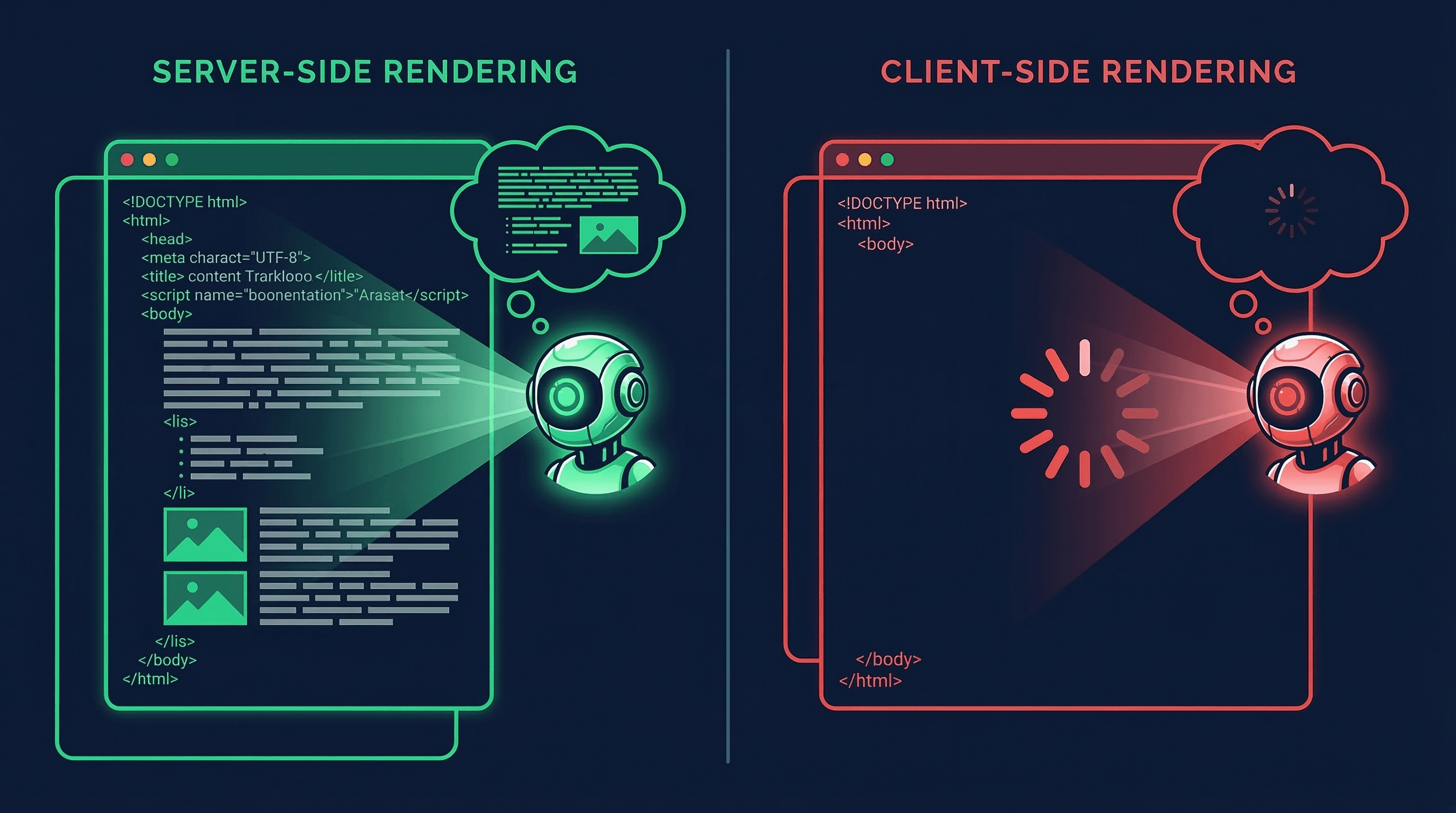
AI agents fetch pages and parse HTML. If your site is a React SPA, the agent sees an empty body tag — your entire product catalog, pricing, and descriptions are invisible. SSR (Server-Side Rendering) ensures full page content is in the initial HTML response. Next.js App Router with SSR is the recommended architecture for AI-first web development. See /insights/hydration-tax-client-side-rendering for the full analysis.
Token Efficiency: Reducing AI Parsing Costs
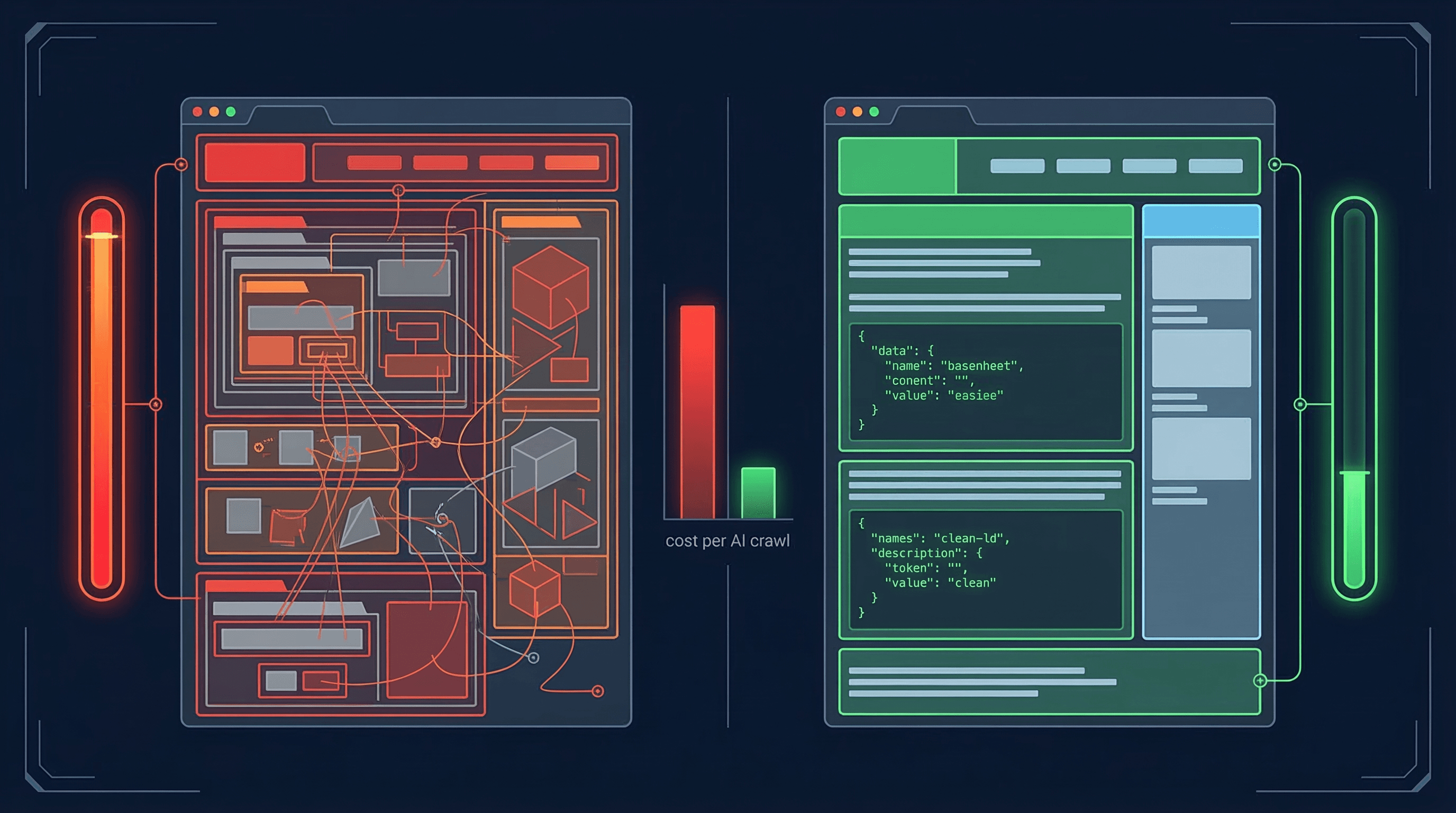
AI agents pay per token when processing your pages. Bloated HTML, repeated navigation boilerplate, inline scripts, and excessive DOM nesting all increase token costs, making AI agents less likely to crawl deeply. Token efficiency techniques: semantic HTML, minimal inline styles, server-rendered text, and clean JSON-LD that agents parse instead of reconstructing from scattered HTML. See /insights/token-efficiency-make-pages-cheap-to-parse.
JSON-LD Schema Implementation
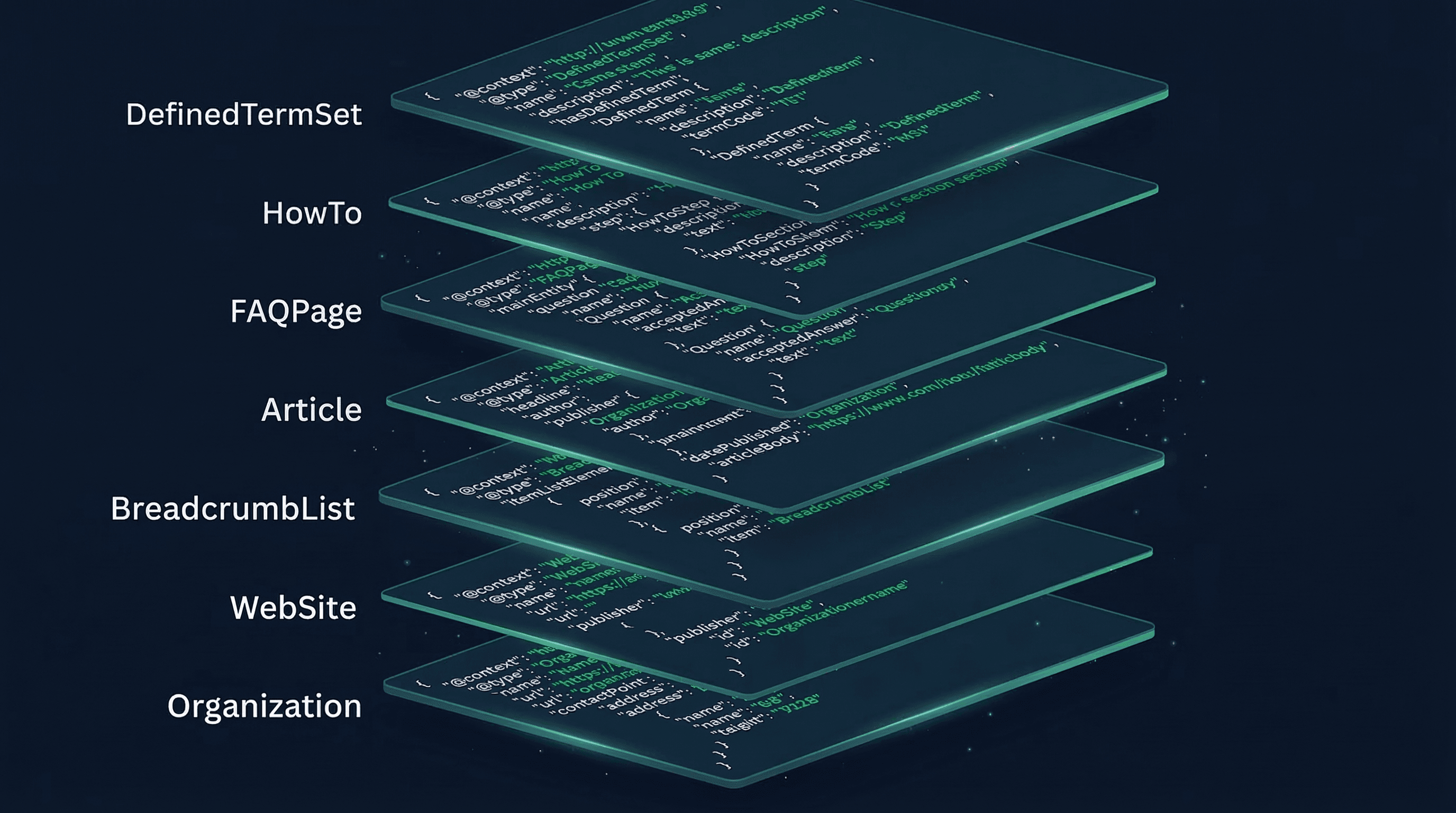
JSON-LD (JavaScript Object Notation for Linked Data) is the preferred format for embedding structured data in web pages. It is read by Google, Bing, and AI systems to understand page content. Every page on adamsilvaconsulting.com embeds JSON-LD in <script type="application/ld+json"> tags with Organization, WebSite, BreadcrumbList, and page-specific schema types. The schema library is at lib/schemas/*.
.well-known Endpoint Configuration
The .well-known directory (defined in RFC 8615) is where AI agents look for machine-readable capability declarations. For agentic commerce: /.well-known/ucp declares UCP capabilities, /.well-known/acp/config.json declares ACP checkout endpoints, /.well-known/ap2/mandates.json declares AP2 mandate types. Publishing these files is the first signal that your business is agent-ready.

Frequently Asked Questions
Does my site need to be built in Next.js for AI discoverability?
No — any SSR framework works (Next.js, Nuxt, SvelteKit, Astro, plain HTML). The requirement is that your pages render full content in the initial HTML response before JavaScript executes. Next.js App Router is recommended for new builds because it makes SSR the default, but existing sites can achieve the same result with proper SSR configuration.
What is the hydration tax?
The hydration tax is the performance penalty of client-side rendering (CSR). When a page uses CSR, the browser downloads a JavaScript bundle, executes it, fetches data from an API, and then renders content — all before an AI agent or search crawler sees any real content. For a typical React SPA, this can mean AI agents see an empty or partial page. Full explanation at /insights/hydration-tax-client-side-rendering.
Related Services
Related Insights
Ready to implement?
Start with a free Agentic Commerce Readiness Assessment (ACRA) to see exactly where you stand — delivered in 48 hours.
Get Started