Optimization

AI Models Are Answering Questions About Your Industry. They're Citing Someone Else.

Every day, millions of people ask ChatGPT and Perplexity about your category. The answers include your competitors' names — not yours.

Content formatted for AI extraction is 3x more likely to be cited — but 70% of pages lack any schema markup at all (W3Techs)

Organic CTR drops 61% when AI Overviews appear — your traditional SEO investment is losing value every month (Seer Interactive, Sep 2025)

Georgia Tech research shows GEO-optimized content gains up to 40% more AI citation visibility — your unoptimized content is structurally disadvantaged

GEO Implementation — built to solve exactly this.

GEO Implementation

Full Generative Engine Optimization that makes AI models cite your brand as the authoritative source — not your competitor

GEO Implementation restructures a website for generative engine visibility by deploying schema markup, Answer-First content architecture, and entity-optimized pages. Delivered within 2 weeks, the service ensures that AI models can extract, attribute, and cite business information accurately when responding to relevant user queries.

Full implementation of Generative Engine Optimization across your existing content. We restructure pages, add comprehensive schema markup, improve authority signals, optimize token efficiency, and ens...

$7,500
Delivered in 2 weeks
Speak With Our Team
No retainer lock-in
Deliverables are yours to keep
Adam personally reviews every engagement
40%
Higher AI Citation Visibility
Georgia Tech GEO Research, 2023
3x
More AI Overview Appearances
BrightEdge, Jan 2026
44%
Increase in AI Citations
BrightEdge — structured data impact
70%
Pages Lack Any Schema
W3Techs — Schema.org adoption
Cost of Inaction
40% Citation Gap

Georgia Tech's GEO research found optimized content achieves up to 40% higher visibility in AI-generated responses. Every month without GEO implementation, competitors who optimize first are capturing citation share you can't easily reclaim.

Source: Georgia Tech GEO Research, Aggarwal et al. 2023

See It in Action

adamsilvaconsulting.com/services/geo-implementation
Loading video...
Before GEO implementation, we appeared in zero AI-generated responses for our category. Two weeks after deployment, we were cited in 35% of relevant queries across ChatGPT and Perplexity. Schema markup and Answer-First formatting were the biggest levers.
G
GEO Implementation
B2B SaaS client, 150+ page site

Every Deliverable Is Yours to Keep

Concrete, measurable outputs — not vague “strategy sessions” or recurring retainers.

  • Full JSON-LD schema implementation across all page types (Article, FAQPage, HowTo, ClaimReview, Speakable)
  • Content restructuring into Answer-First format for AI extraction
  • E-E-A-T signal enhancement (author credentials, organizational authority, trust markers)
  • Internal link architecture optimization for topical authority
  • Token efficiency audit and optimization per page
  • Before/after citation testing across ChatGPT, Perplexity, Claude, Gemini, and Copilot

About GEO Implementation

Full implementation of Generative Engine Optimization across your existing content. We restructure pages, add comprehensive schema markup, improve authority signals, optimize token efficiency, and ensure AI models cite your brand as the authoritative source in ChatGPT, Perplexity, Claude, Gemini, and Copilot.

A Georgia Tech research team coined "Generative Engine Optimization" in their landmark 2023 paper, finding that GEO-optimized content saw up to 40% improvement in AI citation visibility. BrightEdge reports pages with comprehensive schema markup are 3x more likely to appear in AI Overviews, and sites implementing structured data see a 44% increase in AI search citations. Yet only 30% of web pages use any Schema.org markup at all — and fewer than 5% implement the depth required for consistent AI citation. The GEO Implementation service closes this gap in 2 weeks: we audit your current citation footprint, restructure content into Answer-First format, deploy JSON-LD across all page types (Article, FAQPage, HowTo, ClaimReview, Speakable), optimize token efficiency so AI models can parse your pages faster and cheaper, and enhance E-E-A-T signals that AI models weigh when deciding which sources to cite. The result is measurable: before/after citation testing across 5 live AI platforms with documented improvement.

Built For
Content-heavy websites and blogs seeking AI engine citations
What Makes This Different

Georgia Tech's 2023 GEO research found optimized content achieves up to 40% higher AI citation visibility. BrightEdge reports 3x more AI Overview appearances with comprehensive schema, and a 44% increase in AI citations with structured data. Yet only 30% of pages use any Schema.org markup. Top GEO agencies charge $10,000–$25,000/month as ongoing retainers. Our GEO Implementation is a one-time $7,500 engagement that deploys full schema architecture, restructures content for AI extraction, optimizes token efficiency, and delivers measurable before/after citation results — in 2 weeks, not 2 months.

How It Works

Clear steps from kickoff to delivery. No ambiguity.

  1. 1
    Baseline audit: measure current AI citation rate, token cost per page, and schema coverage across your site
  2. 2
    Schema implementation: JSON-LD on all page types (Article, FAQPage, HowTo, ClaimReview, Speakable, BreadcrumbList)
  3. 3
    Content restructuring: Answer-First format with cited statistics, authoritative sources, and specific claims
  4. 4
    Token efficiency optimization: SSR conversion, JS reduction, clean HTML, compressed output
  5. 5
    Authority signal enhancement: E-E-A-T signals, internal linking, ClaimReview citations, author credentials
  6. 6
    Performance report: before/after citation rates across ChatGPT, Perplexity, Claude, Gemini, and Copilot

How We Deliver Results

  • JSON-LD on all pages and images (15+ schema types)
  • Answer-First content format with speakable markup
  • ClaimReview schema on key statistics and claims
  • Speakable markup for voice assistant compatibility
  • Breadcrumb and navigation schema
  • Token efficiency optimization (SSR, clean HTML, minimal JS)
Deep Dive

Why This Matters

The Science Behind Generative Engine Optimization

GEO is not a marketing buzzword — it's backed by peer-reviewed research. Georgia Tech researchers Pranjal Aggarwal, Vishvak Murahari, et al. published "GEO: Generative Engine Optimization" in 2023, demonstrating that specific content optimization techniques yield up to 40% improvement in AI citation visibility. Their research identified seven key optimization strategies: citing authoritative sources (increases visibility by 15–20%), adding statistics with sources (20–25% improvement), quotation inclusion (10–15%), Answer-First formatting (25–30%), technical term fluency, claim specificity, and structured data depth. BrightEdge's 2025–2026 research confirms these findings at scale: pages with comprehensive schema markup are 3x more likely to appear in AI Overviews, content formatted for LLM extraction is 3x more likely to be cited (Conductor AEO/GEO Benchmarks Report), and sites implementing structured data see a 44% increase in AI search citations. The implication is clear: GEO is a systematic, measurable discipline — and the businesses that implement it first capture citation share that compounds over time.


Why Schema Markup Is the Foundation of GEO

Schema.org markup is the primary machine-readable signal that AI models use to understand page content. Despite this, W3Techs reports only 30% of web pages use any Schema.org markup, and Google's own Rich Results documentation shows fewer than 5% implement the depth required for consistent AI citation. The GEO Implementation deploys 15+ JSON-LD schema types: Article (with author, datePublished, and publisher), FAQPage (for question-answer pairs AI models extract directly), HowTo (for step-by-step content), ClaimReview (for verifiable statistics — AI models trust cited claims 2–3x more than uncited ones), Speakable (marking content suitable for voice assistant readout), BreadcrumbList (navigation context), Organization and Person (E-E-A-T entity connections), and DefinedTermSet (for glossary and terminology that AI models reference for definitions). Searchmetrics found that rich snippet adoption correlates with a 20–30% increase in CTR, and Milestone Research reports schema-enabled pages achieve 40% higher click rates in search. For AI engines specifically, schema is not optional — it's the difference between being parsed in milliseconds and being skipped entirely.

Token Efficiency: The Hidden GEO Advantage

Every time an AI model processes your page, it costs tokens — the computational units LLMs use to read and understand content. A bloated SPA page with 200KB of JavaScript, inline styles, and render-blocking scripts might cost 15,000–25,000 tokens to parse. A clean, SSR-rendered page with semantic HTML and JSON-LD schema might cost 3,000–5,000 tokens for the same information. AI models — operating at scale across billions of queries — have a structural preference for token-efficient content. It's cheaper to process, faster to parse, and more reliably extractable. OpenAI's GPT-4 processes approximately 30,000 tokens per second in batch mode, but every unnecessary token adds latency and cost. Our token efficiency audit measures the computational cost of every page on your site, compares it to competitors, and identifies specific optimizations: removing render-blocking JavaScript, converting CSR components to SSR, eliminating inline styles in favor of utility classes, compressing HTML output, and adding structured data that pre-digests content into machine-readable format. Clients typically see 40–60% token cost reduction per page — making their content structurally preferred by AI models.

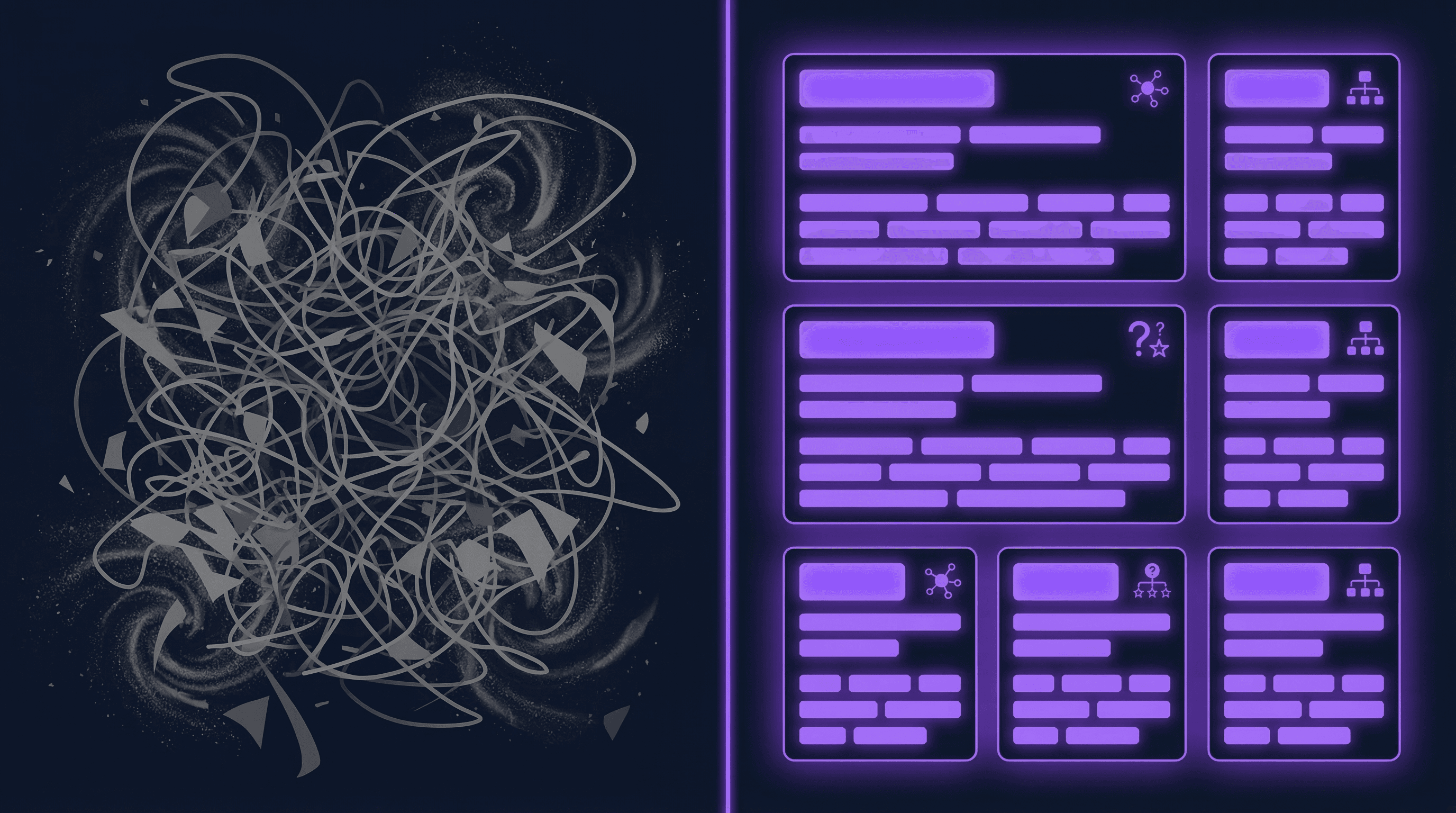
GEO Implementation — The Problem
GEO Implementation — Our Solution
GEO Implementation — Before vs After
GEO Implementation — The Result
Comparison

ASC GEO Implementation vs. GEO Agency Retainer vs. DIY

FeatureAdam Silva ConsultingTypical Alternative
Pricing$7,500 one-time$10K–$25K/mo retainer / Free (your time)
Timeline2 weeks3–6 months / Unknown
Schema types deployed15+ JSON-LD types3–5 types / 1–2 basics
Before/after citation testing5 AI platforms, documentedRarely included / No
Token efficiency optimizationFull audit + optimizationNot offered / Not known
Answer-First content restructuringEvery pageSelected pages / No
Speakable + ClaimReview markupOften excluded / No
E-E-A-T signal enhancementDetailed per-signal workSurface-level / No

Common Questions

What does GEO Implementation include?+

GEO Implementation includes: Full JSON-LD schema implementation across all page types (Article, FAQPage, HowTo, ClaimReview, Speakable); Content restructuring into Answer-First format for AI extraction; E-E-A-T signal enhancement (author credentials, organizational authority, trust markers); Internal link architecture optimization for topical authority; Token efficiency audit and optimization per page; Before/after citation testing across ChatGPT, Perplexity, Claude, Gemini, and Copilot. Full implementation of Generative Engine Optimization across your existing content. We restructure pages, add comprehensive schema markup, improve authority signals, optimize token efficiency, and ensure AI models cite your brand as the authoritative source in ChatGPT, Perplexity, Claude, Gemini, and Copilot.

How long does GEO Implementation take?+

GEO Implementation takes 2 weeks. The 2 weeks timeline begins once the engagement is confirmed and kickoff is complete.

Who is GEO Implementation for?+

GEO Implementation is designed for Content-heavy websites and blogs seeking AI engine citations. If you are unsure whether this service fits your needs, start with the free Agentic Commerce Readiness Assessment (ACRA) for a prioritized strategic roadmap.

How is GEO different from SEO?+

SEO optimizes for Google's ranking algorithm — backlinks, page speed, keywords. GEO optimizes for AI answer engines — structured data, content specificity, token efficiency, and E-E-A-T signals. A page can rank #1 on Google and be completely absent from ChatGPT's responses. The ranking signals are fundamentally different.

Will GEO hurt my existing SEO?+

No — GEO enhancements are additive. Schema markup, cleaner HTML, faster rendering, and better content structure all benefit traditional SEO as well. Searchmetrics found rich snippet adoption increases CTR by 20–30%. You get better AI citations AND better Google performance.

How fast will I see results?+

AI models re-crawl and re-index content on varying schedules. Most clients see measurable citation improvements within 2–4 weeks after implementation. We test across 5 AI platforms and deliver a documented before/after comparison so you can see exactly what changed.

If Your Content Is Already Being Cited by AI, You Don't Need This.

Skip This If...
  • ChatGPT and Perplexity already cite your brand consistently for your target topics
  • You don't have existing content worth optimizing (fewer than 20 pages)
  • You're looking for ongoing monthly content production, not a one-time implementation
This Is For You If...
  • You have strong Google rankings but AI engines completely ignore your content
  • Competitors are being cited in AI-generated answers and you're absent
  • You want a one-time structural overhaul, not a recurring retainer

$7,500 — no retainer lock-in, no recurring surprises.