Automation

Your Competitors Have a 10,000-Lead Head Start. Every Month.

While your SDRs manually prospect 50 leads a day, automated systems build targeted lists of 10,000+ verified contacts — at 25-35% of the cost of a single SDR.

Manual prospecting costs $4,000-$6,000/month per SDR — and produces 200-300 leads

Your bounce rate is probably 8-15% because you're not running real-time verification

ZoomInfo charges $15,000-$40,000/year for data that's already 30% decayed

Lead Scraping (Hunter Module) — built to solve exactly this.

Lead Scraping (Hunter Module)

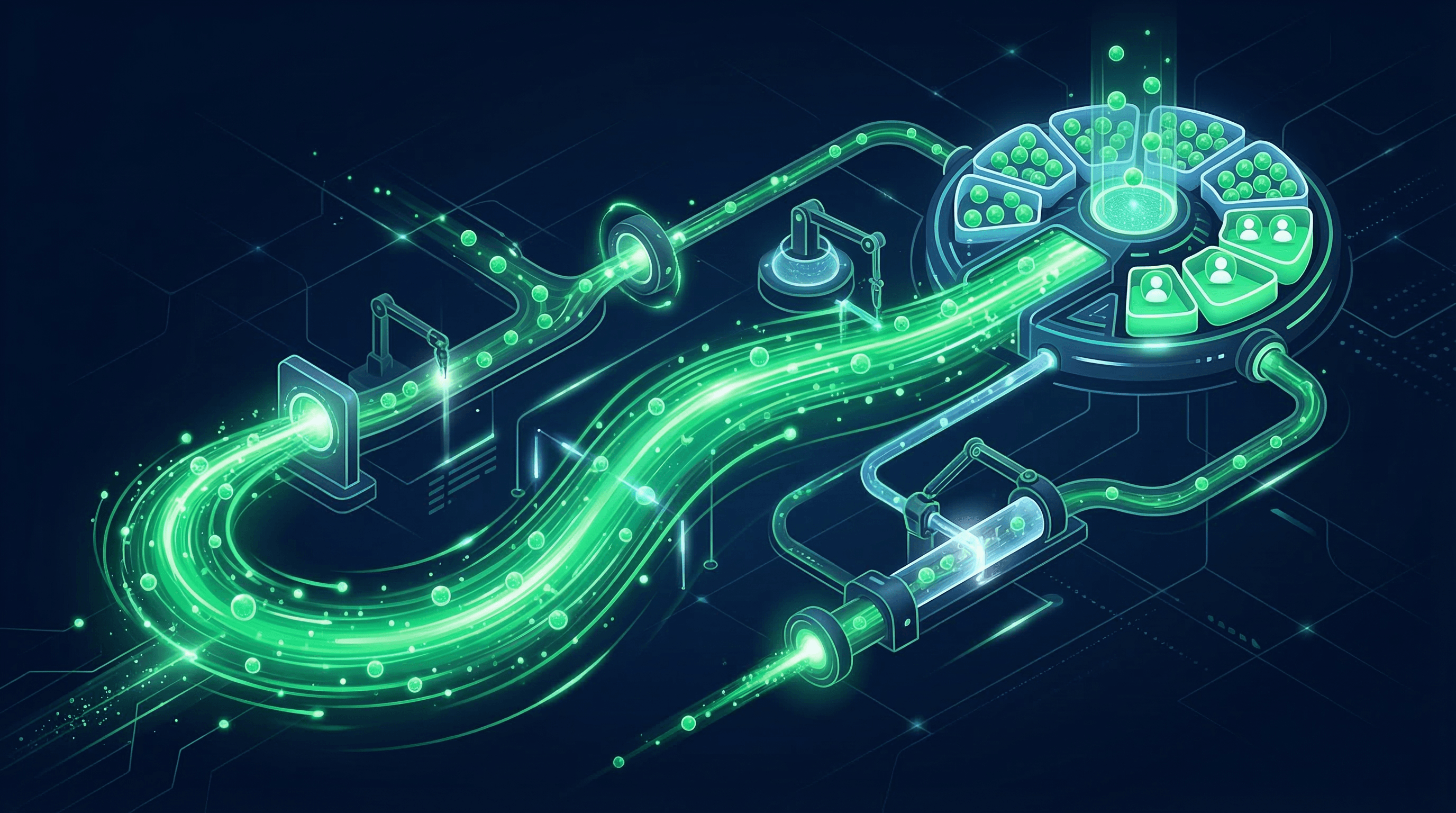
A continuous stream of net-new ICP targets from public sources — validated, deduplicated, and delivered to your CRM on autopilot

AI Lead Scraping automates prospect discovery by continuously scanning sources filtered against an ideal customer profile and delivering qualified leads directly into the CRM. The ICP-filtered approach eliminates manual research, building a persistent pipeline of prospects that match specific industry, size, technology, and intent criteria.

An automated workflow that discovers net-new ICP targets from public sources and produces a clean, validated list for outreach. ICP-filtered targeting ensures every record matches your ideal customer ...

$9,500 + $2,200/mo
Delivered in 3 weeks
Speak With Our Team
No retainer lock-in
Deliverables are yours to keep
Adam personally reviews every engagement
70–85%
Lower CPL vs Manual
$15–50/lead vs $150–350 manual
5–8x
Higher Reply Rates
Enriched vs generic lists
170:1
Pipeline-to-Cost Ratio
Conservative model at $2,200/mo
<2%
Bounce Rate SLA
vs 12–25% unverified lists
Cost of Inaction
70-85% Lower CPL

Automated, compliant lead scraping delivers 10-20x the volume at 25-35% the cost of manual SDR prospecting — with sub-2% bounce rates and full legal compliance.

Source: SDR cost benchmarking, 2025

See It in Action

adamsilvaconsulting.com/services/lead-scraping
Loading video...
We replaced a $36K/year ZoomInfo contract and a full-time SDR researcher with the scraping module. Cost dropped 70%, volume went up 8x, and bounce rate went from 12% to 1.4%.
P
Pipeline Automation
B2B agency, outbound-first model

Every Deliverable Is Yours to Keep

Concrete, measurable outputs — not vague “strategy sessions” or recurring retainers.

  • Source connectors and extraction logic per approved public sources (up to 2 in base scope)
  • Validation layer: active status, category match, contactability signals, and data freshness
  • Dedupe, suppression, and export/writeback to CRM, database, or spreadsheet
  • Monitoring and alerting for source layout changes (break/fix included)
  • Monthly ICP filter review and adjustment (up to 1 update/month)
  • Source performance report with yield rate and data quality metrics

About Lead Scraping (Hunter Module)

An automated workflow that discovers net-new ICP targets from public sources and produces a clean, validated list for outreach. ICP-filtered targeting ensures every record matches your ideal customer profile before it hits your pipeline.

Most outbound teams rely on buying static lists that are stale before they arrive. The Hunter Module flips this: it continuously discovers net-new targets from public directories, industry databases, and government registries — filtered by your ICP criteria (geography, industry, company size, technology signals). Every record is validated for active status, category match, and contactability before being deduplicated against your existing CRM and delivered for outreach. The result is a perpetual pipeline of fresh, qualified targets that your team has never contacted — without manual prospecting work.

Built For
B2B businesses needing a consistent stream of outbound targets
What Makes This Different

The B2B lead generation market is $5.3B and growing at 15% CAGR (2024). Yet 68% of B2B companies struggle with lead quality over quantity (Demand Gen Report). Manual SDR prospecting costs $150–350 per qualified lead; the Hunter Module delivers ICP-filtered, enriched leads at $15–50 each — a 70–85% cost reduction. The hiQ Labs v. LinkedIn ruling (2022) confirmed the legality of public data scraping. Raw scraped data is 40–60% incomplete, which is why we run every record through multi-source enrichment and verification before CRM delivery. One SDR costs $6,500–9,000/mo and produces 15–25 leads. The Hunter Module at $2,200/mo delivers 200–500+ — 10–20x the volume at 25–35% of the cost.

How It Works

Clear steps from kickoff to delivery. No ambiguity.

  1. 1
    ICP workshop: we define your target criteria — geography, industry, size, and qualifying signals
  2. 2
    Source selection: identify the highest-yield public sources for your market
  3. 3
    Connector build: extraction logic, validation rules, and ICP filtering deployed per source
  4. 4
    Pipeline integration: dedupe, suppression, and CRM/database writeback configured
  5. 5
    Monitoring: automated alerts for source layout changes with break/fix maintenance included
  6. 6
    Monthly review: source performance analysis, yield rate reporting, and ICP filter adjustments

How We Deliver Results

  • Up to 2 public sources in base scope (expandable)
  • ICP-filtered targeting: geo, category, size signals, technology stack
  • Suppression list and dedupe management
  • Break/fix maintenance for source layout changes included
  • CRM, database, or spreadsheet destination
  • Ethical sourcing: public data only, fully compliant
Deep Dive

Why This Matters

From Reactive Lists to Proactive Discovery

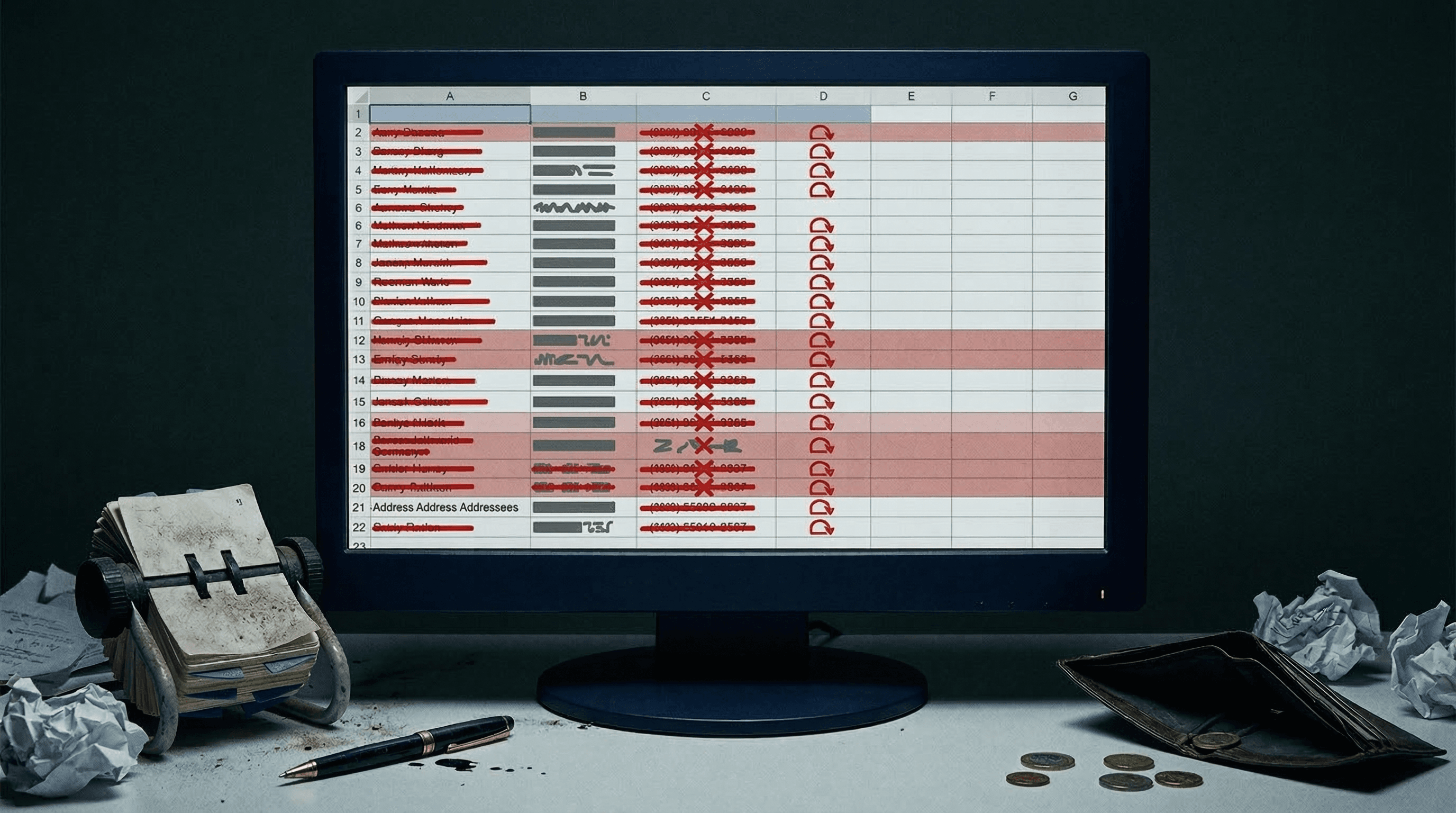
The traditional approach to outbound is buying a list from ZoomInfo ($15–40K/year) or Apollo, loading it into your CRM, and having reps work through it until it's exhausted. The problem: those lists are static snapshots. B2B contact data decays at 2–3% per month — roughly 30% per year (Marketing Sherpa). By the time your reps call, contacts have changed jobs, companies have restructured, and phone numbers have been reassigned. Sales teams spend 21.7% of their time on research and data entry instead of selling (Salesforce State of Sales). The Hunter Module is fundamentally different — it discovers net-new records continuously from public directories, government registries, and industry databases, so your pipeline always has fresh targets your team has never contacted. Cold outbound reply rates jump from 1–3% with generic lists to 8–15% with enriched, ICP-filtered data (Salesloft/Outreach benchmarks).

ICP Filtering: Quality Over Volume

Raw scraped data is 40–60% incomplete or inaccurate without enrichment. The Hunter Module applies three signal layers at extraction: firmographic (industry, employee count, revenue, geography, funding stage), technographic (CRM platform, marketing stack, competitor tools detected via BuiltWith/Wappalyzer), and behavioral/intent (hiring patterns, funding announcements, leadership changes, competitor review activity on G2). Records are scored against your ICP — A-tier (80+ score) for priority outreach, B-tier (60–79) for standard sequences, C-tier for nurture only. Lead-to-opportunity conversion jumps from 5–10% with raw lists to 15–25% with ICP-filtered, enriched data. We track yield rates per source so you always know which sources produce the highest-converting targets.

Ethical and Compliant Sourcing

The Ninth Circuit's hiQ Labs v. LinkedIn ruling (2022) and the Supreme Court's Van Buren v. United States (2021) established that scraping publicly available data does not violate the Computer Fraud and Abuse Act. All Hunter Module data is sourced exclusively from publicly accessible directories, government registries, and open industry databases — never behind login walls. Compliance is built in: GDPR legitimate interest documentation, CAN-SPAM header requirements, CCPA opt-out honoring, and CASL consent tracking for Canadian targets. The pipeline maintains seven suppression list types — internal opt-outs, existing customers, active pipeline, competitor employees, DNC registries, spam traps, and client-specific exclusions — all synced in real-time with your CRM. Every suppression action is logged with who, when, why, and source for full audit trail.

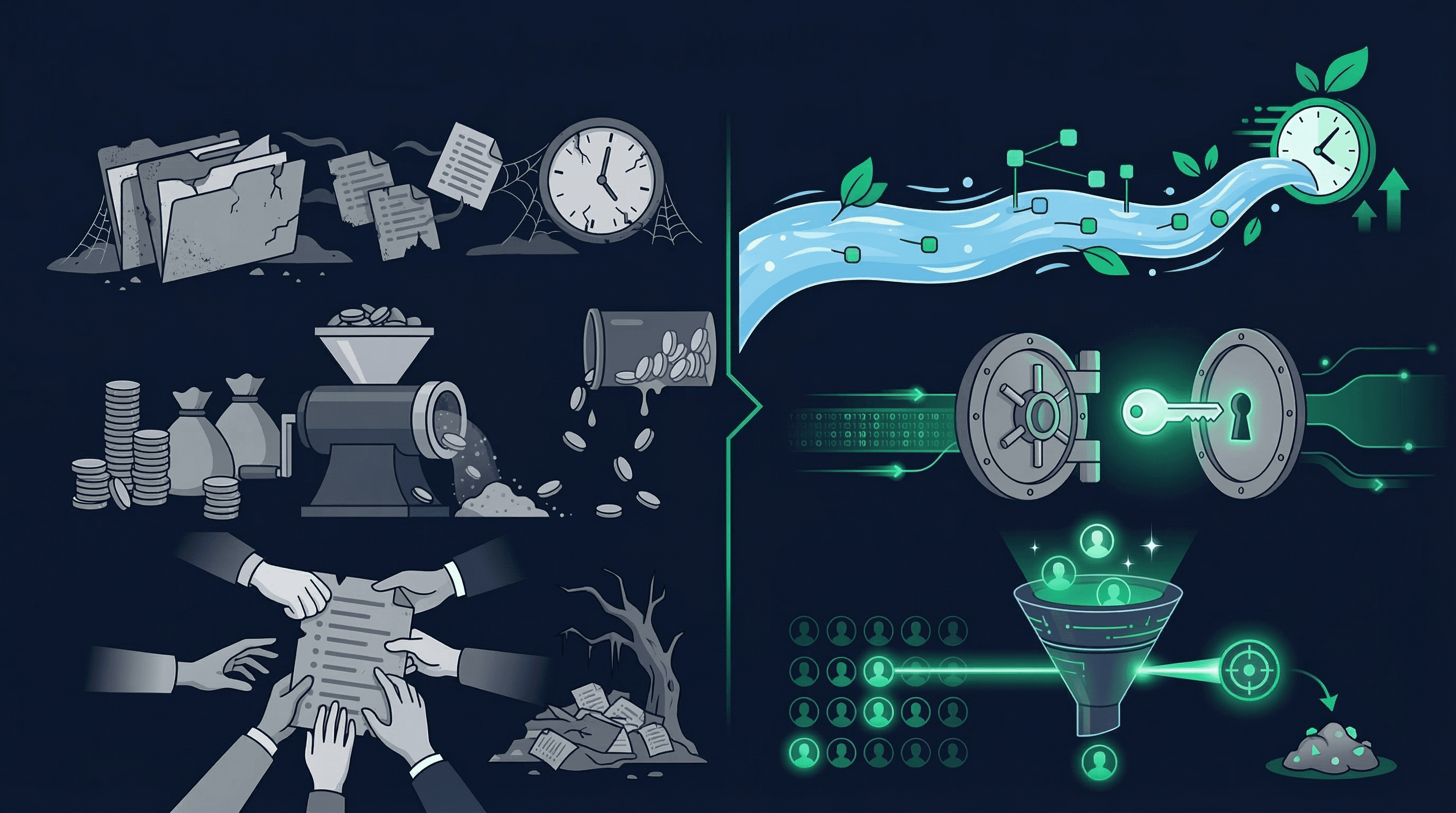
Lead Scraping (Hunter Module) — The Problem
Lead Scraping (Hunter Module) — Our Solution
Lead Scraping (Hunter Module) — Before vs After
Lead Scraping (Hunter Module) — The Result
Comparison

Hunter Module vs. ZoomInfo vs. DIY Scraping

FeatureAdam Silva ConsultingTypical Alternative
Cost per lead$15–50$50–150 / $40–80 + labor
Annual cost$36K ($9.5K + $26.4K)$15–40K / $5–10K + labor
Data freshnessContinuousStatic snapshot / Breaks often
ICP filtering3-layer scoringBasic filters / Manual
Email bounce rate<2% (SLA)5–8% / 12–25%
Reply rate (cold)8–15%3–5% / 1–3%
Suppression management7 list types, real-timeBasic / None
Maintenance requiredNone (break/fix included)None / Weekly
Technical skill neededNoneNone / High

Common Questions

What does Lead Scraping (Hunter Module) include?+

Lead Scraping (Hunter Module) includes: Source connectors and extraction logic per approved public sources (up to 2 in base scope); Validation layer: active status, category match, contactability signals, and data freshness; Dedupe, suppression, and export/writeback to CRM, database, or spreadsheet; Monitoring and alerting for source layout changes (break/fix included); Monthly ICP filter review and adjustment (up to 1 update/month); Source performance report with yield rate and data quality metrics. An automated workflow that discovers net-new ICP targets from public sources and produces a clean, validated list for outreach. ICP-filtered targeting ensures every record matches your ideal customer profile before it hits your pipeline.

How long does Lead Scraping (Hunter Module) take?+

Lead Scraping (Hunter Module) takes 3 weeks. The 3 weeks timeline begins once the engagement is confirmed and kickoff is complete.

Who is Lead Scraping (Hunter Module) for?+

Lead Scraping (Hunter Module) is designed for B2B businesses needing a consistent stream of outbound targets. If you are unsure whether this service fits your needs, start with the free Agentic Commerce Readiness Assessment (ACRA) for a prioritized strategic roadmap.

Is lead scraping legal?+

Yes — when done correctly. The Ninth Circuit's hiQ Labs v. LinkedIn ruling (2022) confirmed that scraping publicly available data does not violate the Computer Fraud and Abuse Act. The Supreme Court's Van Buren v. United States (2021) further narrowed CFAA scope. We source exclusively from publicly accessible directories, government registries, and industry databases — never behind login walls. GDPR, CAN-SPAM, CCPA, and CASL compliance are built into the pipeline with suppression lists, opt-out management, and audit trails.

What happens when a source changes its layout?+

Source websites change their HTML structure regularly. Our monitoring system detects layout changes automatically and alerts our team. Break/fix maintenance is included in the monthly retainer — we update the extraction logic so your pipeline keeps running without interruption.

Can I expand beyond 2 sources?+

Absolutely. The base scope includes 2 sources to get you running quickly. Additional sources are scoped and priced individually based on extraction complexity. Most clients expand to 4–6 sources over the first 6 months as they identify which markets produce the best targets.

If Your Pipeline Is Full, Don't Read Further.

Skip This If...
  • You already have more qualified leads than your team can handle
  • Your ICP is so narrow that manual research is actually efficient
  • You're not comfortable with automated outreach at scale
This Is For You If...
  • Your SDRs spend more time finding leads than talking to them
  • ZoomInfo is too expensive and the data quality doesn't justify the price
  • You need 5,000-50,000 targeted, verified contacts per month

$9,500 + $2,200/mo — no retainer lock-in, no recurring surprises.